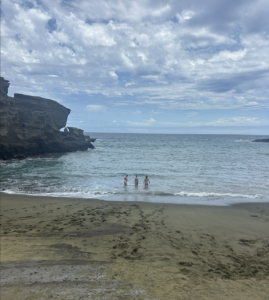
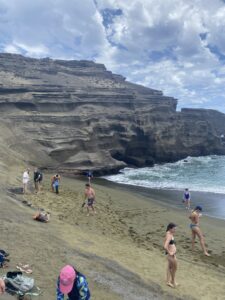
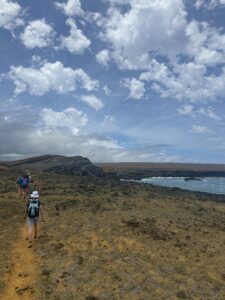
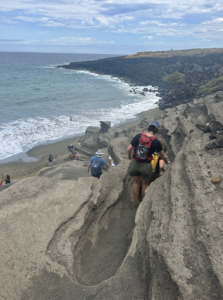
Yesterday, we traveled all the way through the Hawaii Volcanoes National Park down to South Point, the southernmost tip of the United States. Our mission was to see one of the four green sand beaches in the world. The hike, though, was not for the faint of heart and was about 2.8 miles each way. For those less athletically inclined, there were off-roading jeeps that would drive you the way, but our class was up to the task. The journey there was beautiful as we hiked along the coastline and were cooled off by the winds coming off the ocean. We knew we had reached our destination when we saw a large star-wars-spaceship-looking rock with green tints.
 The beach was hidden in a low nook in the rocks that required us to use ladders to descend.
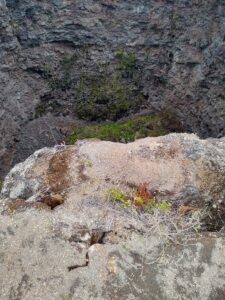
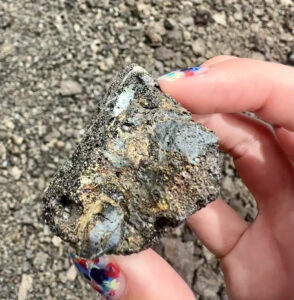
Once we reached the bottom, we worked on an activity to observe the beach’s geology and the reasons for its origin. We began to look closely at the grains of sand using our hand-held magnifying glasses to discover that the green in the sand was due to the olivine. The beach resulted from a cinder cone from the Mona Loa volcano in its southeast rift zone. The green mineral olivine is the first to crystallize when magma cools and is denser than other materials, so it has stayed on the beach. However, the cinder cone is constantly eroding, meaning that the sand will no longer be green one day and that even the whole beach won’t last much longer. We also investigated the layers of rock that we could see from the beach to get a sense of where the olivine was coming from. We saw that the rocks near the ocean were red because of oxidized iron in their composition. We noticed that some rock layers had different textures, colors, and compositions, so we made a stratographic map. After our explorations, we took a little swim in the water. Overall, we had a great experience at the green sand beach and enjoyed our hike!