After driving around Hawai’i island, visiting Hawai’i Volcanoes National Park, exploring the Hamakua Coast, and much more, it was finally time for us to visit the busiest part of the island: Kona.
We started our 10th day by driving through North Kona and into Kohala to visit the picturesque Pololu valley. Since Kohala is the oldest volcano on the island, there rocks in Poll are contain more alkaline and have sodium-rich feldspars.

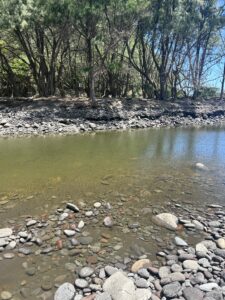
The short, yet steep, hike was accompanied by the simultaneous refreshing yet revolting smells of the Pacific Ocean and rotten fish. Flash floods, just days before we visited, washed tens of thousands of tilapia downstream—which caused the rotting smell—- after large portions of the river dried up.
Instead, as we have done the entire trip, our class pivoted. We were adaptable and decided to visit Hualalai Xenoliths. Just along State Highway 190—or as local’s call it, the ‘high road’—there is an impressive collection of Xenoliths with easy access via the road. The 1800-1801 Hualalai alkalic lava flows are famous for their Xenoliths. These represent the mantle beneath Hawai’i and contains accumulations of olivine, pyroxene, and plagioclase that crystalized from pre-eruption magmas.
Our class was able to appreciate the Xenolith’s by adding some ‘flare’. We seperated into two different groups: one group reenacting the formation of the Xenoliths and another group creating a catchy rap.
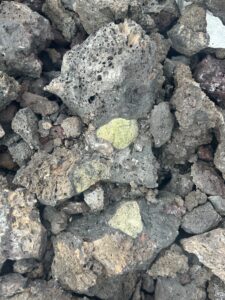
After appreciating the Xenoliths and touching the mantle of the earth, the class was worn out for the day. Some of us grabbed Poke, others hung out around the pool, and everyone came together at the end of the night to have a nice, students dinner at the beachfront bar, Huggo’s on the Rocks.