My Last Blog

Yesterday I got up at 6:50 and went for a walk around Kona. I talked to both of my parents, came back to the hotel to get some breakfast, and then we headed off to our first location. First, we went to Pololu which is one of seven similar locations in the area. On Kohala, this beautiful place was created by erosion and landslides which then created a massive tsunami. What makes this place so special is King Kamehameha grew up here until the age of five. King Kamehameha was prophesized to unite the islands of Hawaii, which he did successfully. There is also a burial ground here which gives this area even more cultural significance. The lush and rainy aspects of this location have given it a beautiful landscape. 
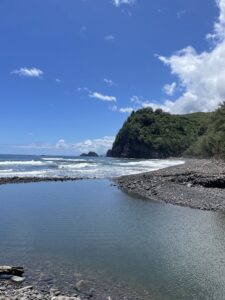
Pololu

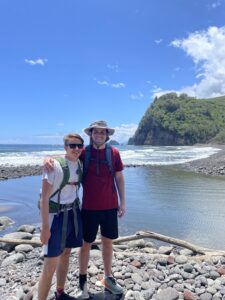
The rocks here are quite different than rocks from other volcanoes. For example, there are rocks with white crystals which means it is a sodium-rich feldspar. There are more alkaline basalts and this is because of Kohalas later stage volcanism. This is a black sand beach with a lot of olivine. The sand is super fine and this is because of the wind and ocean. We hiked down this beautiful area and it was a 500ft descent in 0.5 miles. We got to the bottom and were presented with a gorgeous landscape. After this, we hiked back up the mountain and I was huffing and puffing at the end of this one. 
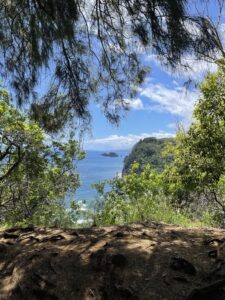
Hike down Pololu

Aiden and I and the bottom of Pololu

We then went to lunch and did a review of what we had done so far on the island. After this, we went into a cute small town. We then tried to go to a beach but it was closed because of dangerous conditions. To make up for this we went to see the xenoliths. This is a rock that is a part of another rock from the earth’s mantle (usually an indigenous rock). The rock got trapped in the magma and was broken off and ended up at our location because of the 1800 alkalic flows. These rocks were very olivine-rich. After this, we went back to the hotel and got in the hot tub, showered, and went to dinner. I got a really good taco salad and then we got shaved ice. We then headed back to the hotel and got in the hot tub again and went to bed at 10. 
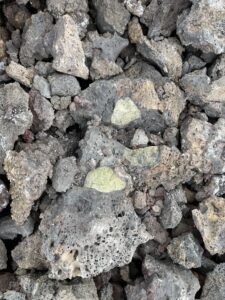
Xenoliths

The Effects of Kilauea

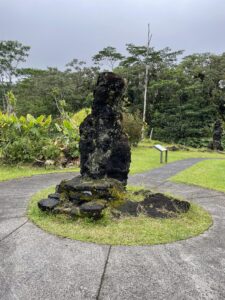
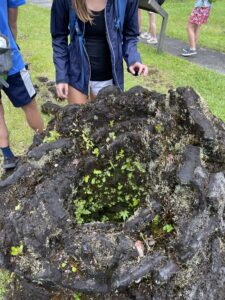
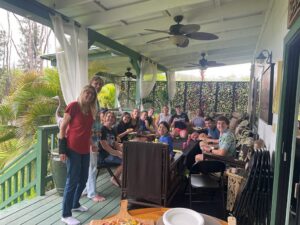
Today was a sleep-in day. I Got up at 7:30 and did absolutely nothing until we left to go and see the lava trees that were created in the 1790 eruption of Kilauea. Trees have a lot of water in them and when the lava hits the trees it evaporates, insulates, and hardens and that is how they are created. It is also possible for the trees to catch fire instead of creating mold. The lava trees can tell you a lot about the eruption. For example, the bark of a tree can tell you what direction the lava is going. We then headed to the Robinson’s house. The Robinsons were a couple that Professor Knapp met at the farmer’s meeting and they invited us to their house to see Fissure 8. Fissure 8 opened up because of the 2018 eruption. This was an amazing opportunity and I was very thankful to them for offering us this opportunity. They even went out of our way to make us pizza and it was some of the best homemade pizza I have ever had. Seeing Fissure 8 was sad because it destroyed 700 homes but also breathtaking to see. After this, we went to Kaimu.

Lava tree

inside lava tree

The Robinsons house

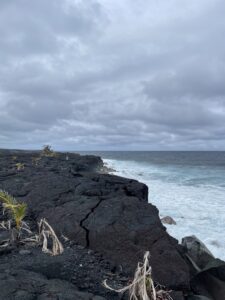
Kamiu is located on the southeast coast of Hawaii. Meaning “gathering of the sea” it was formed in 1990 due to the Kilauea eruption and it was buried under lava and created a black sand beach. This beach is a symbol of rebirth and growth. Destroyed by lava but after some time the area started to be rebuilt and regrow. We then headed to Issac Hale Harbor which used to be a harbor until the 2018 eruption. It is now a new black sand beach and created new hot springs. Near this is Pohoiki which translates to “small hole.” This is also known as Pele’s workshop. This hot spring was formed in a collapsed lava tube and can reach up to 98 degrees Fahrenheit. A few animals like shrimp call this spring their home. It has low oxygen and light levels so there is a lot of bacteria in the spring. Since there are high levels of bacteria people should not enter if they have an open wound. There are both salt and freshwater and this is called anchialine pool. This Greek word translates to “near the sea” and kind of acts like estuaries. This is important for both fish and Hawaiian culture. 

Fissure 8

Kamiu

After this, we came back to the Airbnb until Kaite wanted to go to Rainbow Falls. Since it was raining too much the falls were brown. This is because there is more water in the lake carries more sediments and debris. We then came back to the Airbnb watched Jumonji and got Domino’s pizza for dinner. We then watched a terrible horror that had no actual horror involved and I would not suggest it. I then went to bed at 10.  

Famers Market and Kipuka Pu’u Huluhulu

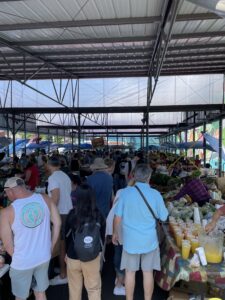
Today Adien and I woke up at 5:30 to go and see the sunrise. It was not as cloudy as previous days so we could actually see it which was amazing. After this, I went back to my room relaxed, got ready for the day, and we left to head to the Farmers Market in Hilo. This was an incredible place and I tried a lot of different fruits I would not have been able to if I was not in Hawaii. I got this amazing drink that had some pineapple, mango, and some other fruits. I got some awesome, high-quality, handmade shirts. I got one for me and one for both of my brothers. After this, we kept looking around we and saw some cool paintings and jewelry. We got L&L for lunch and then went to the Japanese gardens to eat. We walked around the gardens and then got back in the car and headed off to Kipuka Pu’u Huluhulu. 

Hilo Farmers Market

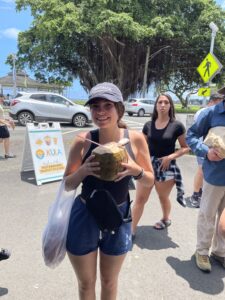
Becca with a coconut

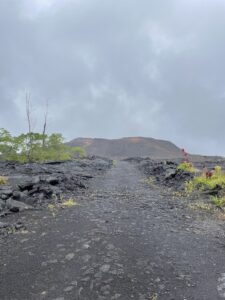
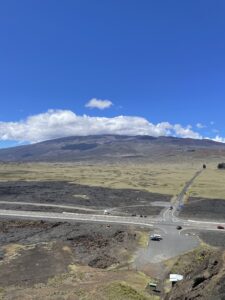
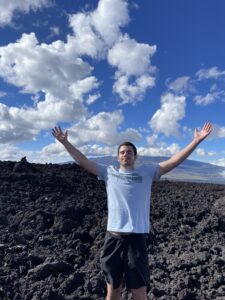
Kipuka Pu’u Huluhulu is a 38-acre tree sanctuary located in the center of Hawaii. Kipuka means a hill that is surrounded by lava but is spared from flowing lava because of its elevation. Pu’u Huluhulu means “hairy hill” and when hiking up it was apparent as to why it is named this. When looking at the trees you can see Pele’s hair on the tree. The flows lasted from 1843 to 1935. From this spot, we can see three volcanoes: Mauna Loa, Mauna Kea, and Hualalai. We then went to a park and played on the playground. We even got Katie to join us for a bit. Then we headed off to Mauna Loa and drove up the volcano. We got 9000 ft above sea level until the road stopped. From 2022 to 2023 the volcano erupted and cut off some of the roads (fact check). This was one of my favorite parts as the lava was a year old. When you think about this are some of the newest rocks in the world. We climbed up the rocks which were very sharp. We had to be very careful and Aidan took a little tumble but he was okay. He did get impressively scratched up considering he mostly caught himself. We got some great pictures and then drove back to the Airbnb. We finished Descendants and Mauna and then for dinner, we will be having leftovers and getting some nuggets from the store.

Kipuka Pu’u HuluhuluThe new lava flow

The Chain of Craters

Today I again woke up at 5:30 to see the sun rise. That was not as exciting today as the sun was blocked by the clouds. The setting was still very enjoyable and relaxing. I sat there and just listened to the ocean and the waves crashing into the rocks. I came back later did some school work, got ready for the day, and then we loaded the car and went back to the Volcano National Park to go to the Chain of Craters. 

We began by going to the Puhimau crater which means “forever smoking.” This is a pit crater that is created when magma drains back into the earth making this geologic wonder. Located on the Kilauea Southeast rift zone this crater has erosion-collapsed features giving the crater its steeply-sided look. We were able to see multiple vents and you can still see steam if you are lucky enough (we sadly were not). This crater was not filled in but others can be because of lava. Puhimau is between 200-600 years old which is a wide range in the geologic world. 

Puhimau

Devils Throat

After this, we went to a more hidden crater called Devils Throat. Found by geologist Thomas Jagger this crater is 165 meters deep. The cross sections (layers) of the crater are very visible and were amazing to see. One would think that the lava drains very slowly to create these craters but in reality, they drain extremely quickly. We then stopped by Manua Ulu which erupted between 1969-1974. The damage this caused was very visible and created a black rocky desert. We then met an amazing guy named Tim who was very friendly and had some interesting ideas. After this, we stopped for lunch with a beautiful view of the water. After we devoured our lunch we went to Pu’uloa and did a one-mile hike. I taught people how to play a fun game called “ice cream or pickle.” We then drove to the sea arch and came back to our Airbnb. I then went snorkeling and am about to have hamburgers for dinner.  

View of ocean where we ateSea Arch

The Kilauea Iki hike

Yesterday we did the Kilauea Iki hike. I woke up at 5:30 to go and see the sunrise and man was it beautiful. The sun rose above the clouds and it was worth the early rise. After this, I went snorkeling and then came back to the house to get dressed for the four-mile hike. We arrived around nine and began our 400-foot descent into the Kilauea Iki crater. This crater was formed when an eruption began in 1959 with one fissure and lasted for five weeks with multiple eruptive episodes. Rocks erupted everywhere but luckily nobody was injured. While Nobody was hurt the forest was overrun with lava and debris. 

Kilauea Iki crater

In the Kilauea Iki crater

When hiking down there are beautiful views of the once lava lake now black rock. After an eruptive episode, the lava would drain back into a vent at four times faster than the eruption. As the lava drained back into the earth the crust collapsed around 50 feet leaving behind cracked uneven rocks. As we walked across the one lava-filled river there was life. It is said that Pele’s (Volcano goddess) sister filled the crater with new life. The cracks in the rocks allow for seeds to be planted for new life to unfold. 

Lava Tube

In the Lava tube

After we exited the crater we went to the lava tube which was my favorite part of the day. As the lava flows through the earth the rock around the tube hardens and makes the lava tube. We next went to the Kilauea Summit. This summit is known as the home of Pele. This spot is known as the home of Pele as it is the most active volcano in Hawaii. There was an eruption in 2018 and in 2019 there was water in the caldera. People were very afraid that if the volcano were to erupt the consequences would be disastrous. The water would have made the eruption more explosive causing more damage than a regular eruption but luckily this did not happen. This was the morning and afternoon of my day 2 in Hawaii. 

Kilauea Iki summit