We started early in the morning and drove into Hawaii Volcanoes National Park to get a closer look at the island chain’s youngest and most active volcano. Luckily, we got a parking spot right in front of the trailhead and were able to begin our journey after applying copious amounts of sunscreen. The hike started in luscious, dense jungle greenery, where we traveled along the top of the crater. Once we came to the first lookout point, we were in awe of the size and beauty of the crater.
 This vast crater was created by an eruption in November 1959, during which lava began to flow. Scientists knew this eruption was coming months before due to the intense earthquakes in the area and the pressurization of the magma gathering towards the surface. The first lava came from a half-mile-long fissure that created a horrifyingly beautiful curtain of lava.
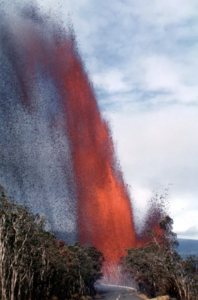
Over the following weeks, the lava spewed thousands of feet high, even reaching the far side of the crater. A new cinder cone was created, and the magma began to fill the reservoir, creating a lava lake. Once the magma covered the top of the vents, eruptions stopped and began draining back into the vents. Today, a bathtub ring is still visible around the crater, which shows how high the lava reached. After hiking along the top of the crater, we descended to the floor of the once-molten lava lake.  We got to see and feel firsthand the rocks that had erupted almost 70 years ago. In fact, the lava lake did not fully solidify until the 90s, giving geologists a rare opportunity to study the process of cooling rocks. As we traveled through the bottom of the crater, we all had an out-of-body experience and felt like we were adventurers from Journey to the Center of the Earth or Jurassic Park. We could see evidence of the flowing lava in the dried rocks below our feet from the folds close together. This hike was one of my favorite things we have done so far, as I fulfilled my childhood dreams of seeing a real-life volcano!
